
Why Your Breaker Keeps Tripping in Winter
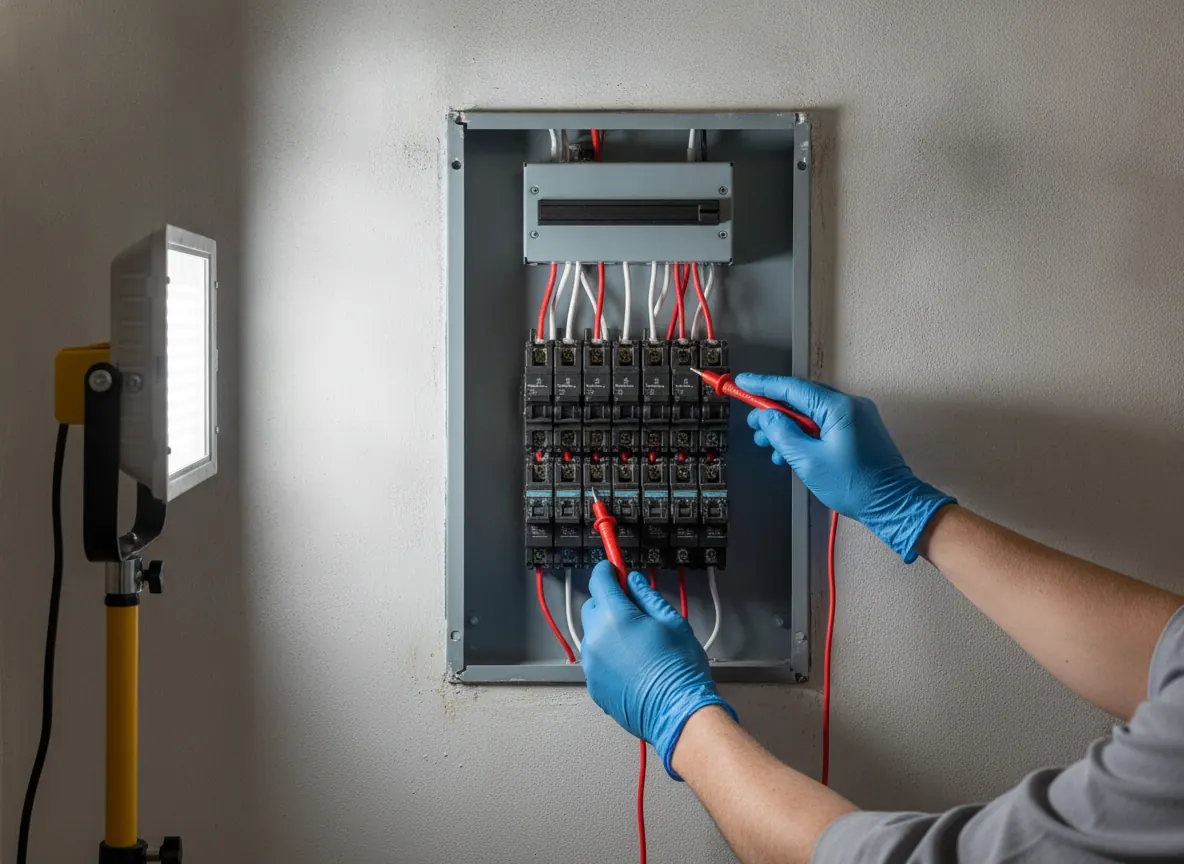
Short answer: most winter breaker trips in Bozeman, MT come from overloaded circuits (space heaters, block heaters, a garage heater), from moisture tripping GFCI protection on outdoor outlets and heat tape, or from a fault the breaker is doing its job to stop. One trip after an obvious overload is usually a load problem. A breaker that trips again right away, a warm panel, or a burning smell is a reason to stop resetting and call a licensed electrician.
Safety first: smoke or fire, call 911. A burning smell, a hot or discolored outlet or panel, or sparking means leave the breaker off and call a licensed electrician; see emergency electrician. If the whole house or the street is dark, it may be the utility: check the NorthWestern Energy outage map or call 888-467-2669; Park Electric members call 406-222-7778.
Why breakers trip more in winter
Winter is when a Bozeman house works hardest. The MSU station averages 7,828 heating degree days a year and 178 nights at or below freezing (NOAA 1991–2020). About 35.9% of occupied homes in Bozeman heat mainly with electricity (ACS 2020–24 5-year), and many gas-heated homes still add plug-in heaters, heat tape and block heaters. Those loads stack up on circuits that were sized for lamps and a TV.
Space heaters on bedroom circuits
A typical 1,500 watt space heater draws about 12.5 amps at 120 volts. A common bedroom circuit is 15 amps, and heaters run for hours, so one heater plus a few other things can trip it. Two heaters on the same circuit almost always will, even when they are in different rooms.
| Appliance | Typical watts | About amps |
|---|---|---|
| Space heater, high setting | 1,500 W | 12.5 A |
| Hair dryer | 1,500 W | 12.5 A |
| Engine block heater | varies; often several hundred to 1,000+ W | check label |
| Microwave | 1,000–1,200 W | 8–10 A |
| Electric blanket | 100–200 W | about 1–2 A |
What helps: move a heater to a circuit with little else on it, run one heater per circuit, and plug heaters straight into the wall rather than a power strip or extension cord, as most heater manuals direct. If a room is always cold enough to need a heater, ask an electrician about a dedicated circuit or a permanent heat source.
Heat tape, roof heat cable and outdoor outlets
Heat tape on pipes and heat cable on the roof edge are usually on GFCI or ground-fault equipment protection. That protection trips when current leaks to ground, which is what happens when cable insulation is cracked, a connection is wet, or melting snow gets into an outdoor outlet. A trip that comes back during a thaw or a wet snow often points to water in an outlet box or damaged cable. Old or kinked tape is a common culprit. Our post on heat tape and roof heat cable covers safe circuits and replacement, and the outlets and GFCI page covers weatherproof in-use covers.
Block heaters and the garage
Engine block heaters, a garage space heater, a freezer and a battery charger often share one garage circuit. Plug in two block heaters and a heater and the breaker trips at 6 a.m. Spread the loads or use a timer if the vehicle maker allows it, and ask an electrician about a dedicated garage circuit if you rely on it every night. Exterior and garage outlets should be GFCI-protected, so a wet cord end can trip them too.
Heat pumps and electric heat
Heat pumps and electric furnaces have their own 240 V breakers. Many heat pumps lean on electric backup strips in deep cold, and that is when an undersized or failing circuit shows up. If a heat pump, furnace or baseboard breaker trips, don't keep resetting it; you could lose heat at night. Call the HVAC contractor or a licensed electrician, depending on whether the problem is the equipment or the circuit. See heat pumps and your electrical panel.
AFCI trips and older panels
Arc-fault (AFCI) breakers protect bedroom and living-area circuits, and Montana's code amendments extend AFCI protection to unfinished basements. They trip on arcing from a damaged cord or loose connection, and some older AFCIs also react to heater or vacuum motors. Repeated AFCI trips deserve an electrician's look rather than a swap to a standard breaker.
If your panel is a Federal Pacific Stab-Lok, note that the CPSC closed its 1983 investigation without finding a serious risk, but said its data were limited, and some insurers treat these panels as a hazard. Some insurers also ask about older brands such as Zinsco; ask your agent. The panel upgrade page covers replacement.
What you can safely do, and what to leave alone
- Turn off or unplug what was running on that circuit.
- Reset the breaker once: push it firmly to OFF, then back to ON.
- If it holds, add loads back one at a time to find the overload.
- For a GFCI outlet, press RESET; if it won't reset, leave it off and find the wet or damaged device.
- Label your panel so the next trip is faster to sort out.
Don't tape or hold a breaker on, don't swap in a larger breaker, and don't remove the panel cover. A breaker that trips instantly on reset, buzzes, feels hot or trips with nothing plugged in needs a licensed electrician.
Renters: report repeated trips to your landlord in writing. The landlord arranges a licensed electrician; DLI says electrical work on rental property must be done by licensed contractors. Not legal advice.
What a diagnostic visit costs
National cost guides list a service call at $100–$200, often covering the first hour (HomeGuide), or a service visit at $176–$327 (Fixr), and a GFCI outlet at $130–$300 (Angi, 2026). These are estimates, not quotes. Ask up front about the trip or diagnostic fee and the after-hours rate, and ask for a written, itemized quote before repair work starts. See the Bozeman electrician cost guide.
Montana requires electricians and electrical contractors to be licensed by the State Electrical Board (MCA Title 37, ch. 68). Look up any contractor or electrician by name or license number in the Montana DLI license lookup, and ask to see the license; electricians must carry it on the job.
About this site: Bozeman Electricians is a free quote-referral service, not an electrician or electrical contractor. It holds no Montana electrical license and does not perform electrical work. You describe the job once, and independent electrical contractors licensed by the Montana State Electrical Board and serving Bozeman, MT and the Gallatin Valley can reply with quotes on their own schedules. Some contractors may pay to receive requests or calls. Request free quotes.
Frequently asked questions
Why does my breaker keep tripping when I run a space heater?
A 1,500 watt heater draws about 12.5 amps at 120 volts, most of a 15 amp circuit. Anything else on the same circuit can push it over. Move the heater to a lightly loaded circuit, plug it into the wall, and ask an electrician about a dedicated circuit if you need it every day.
Why does my outdoor GFCI trip when it snows?
Water from melting snow can get into outlet boxes, cords or heat tape connections and leak current to ground, which trips GFCI protection. Dry, intact equipment and weatherproof in-use covers help. Repeated trips need a licensed electrician.
Is it safe to keep resetting a breaker?
Resetting once after an obvious overload is normal. If it trips again right away, trips with nothing plugged in, feels hot or smells like burning, leave it off and call a licensed electrician. For smoke or fire, call 911.
Should I call NorthWestern or an electrician?
If the whole house or the neighborhood is out, check NorthWestern's outage map or call 888-467-2669. If only part of your house is out, or a damaged meter base or mast is involved, a licensed electrician handles your side.