Heated Driveway & Snow-Melt Installation in Bozeman, MT

The MSU station averages 91.3 inches of snow a year (NOAA 1991–2020 normals). Electric snow-melt clears driveways, walks and steps without a shovel. Bozeman Electricians is a free quote service that connects Bozeman, MT homeowners with independent licensed electricians for snow-melt and heat cable quotes.

Get a Free Quote Call (406) 643-1006

When electric snow-melt makes sense

  • A steep driveway turns to ice after a melt-and-freeze day.
  • Front steps or a walk need to stay clear for an older parent, a wheelchair or deliveries.
  • You are pouring a new driveway or repaving, which is the easiest time to add cable.

How electric snow-melt systems work

Electric and hydronic systems both work. The electrical side looks different for each.

Electric (cable or mat)

Heating cable or mats sit in the concrete, asphalt or paver base. A sensor detects moisture and cold, and a controller switches the zones on through a contactor. Each zone runs on a dedicated 240 V circuit with ground-fault protection of equipment (GFPE), which the code requires for fixed outdoor snow-melting systems.

Hydronic (boiler and tubing)

Warm glycol runs through tubing under the surface. A heating contractor builds the boiler side, and the electrician powers the boiler, pumps and controls. It uses far less electrical capacity, but it costs more to plumb.

Load per square foot and panel capacity

Electric snow-melt is one of the largest loads a home can carry. Manufacturer spec sheets for driveway cable commonly list somewhere around 30 to 50 watts per square foot; use the figure for the product you are quoted. At 40 watts, a 400 sq ft driveway draws 16,000 watts, about 67 amps at 240 volts. That is more spare capacity than many homes have.

Ways to make it fit: heat only the tire tracks and the walk, split the area into zones that run in turns, or plan a panel upgrade with the project. Automatic sensors cut running time compared with a manual switch. Ask for running-cost assumptions in writing.

What a snow-melt install typically involves

  1. Load calculation

    Check service size and existing loads, then size the zones.

  2. Layout with the paving contractor

    Cable or mats are laid out and tested before the pour.

  3. Circuits and controls

    Dedicated circuits with GFPE breakers, a contactor panel and the controller are wired in.

  4. Inspection before cover

    State inspections need 48 hours' notice before work is covered.

  5. Final test

    Each zone is checked, and you see the controls.

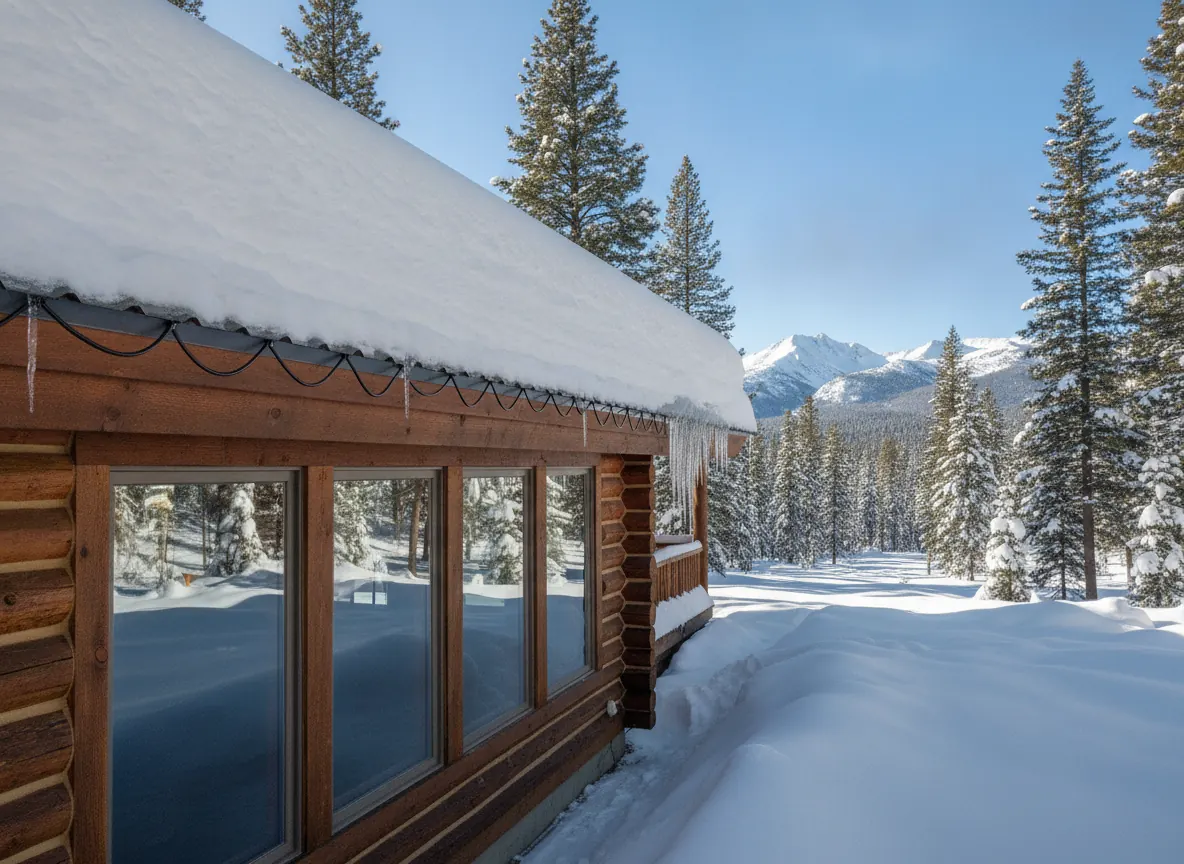
Roof de-icing heat cable along the eaves of a snowy home

Roof heat cable for ice dams and gutters

Roof heat cable runs in a zigzag along the eaves and down the gutters and downspouts so meltwater can drain. It does not fix attic heat loss, but it helps keep ice from building where the roof is coldest.

  • Use cable listed for roofs and gutters, often self-regulating.
  • Wire it to a dedicated circuit with ground-fault protection, not an extension cord.
  • Add a thermostat or moisture sensor so it doesn't run all winter.
  • Replace old, brittle or plug-in tape that trips or feels hot.

Read roof heat cable and heat tape in Bozeman, and see outlets and GFCI if an exterior outlet keeps tripping.

Snow-melt in Bozeman and Big Sky

Cold matters as much as snowfall: NOAA normals give MSU about 13.5 nights a year at or below 0°F. In Big Sky, the ACS counts 58.7% of housing units as seasonal or vacation homes, so owners often ask about remote monitoring for the controller and alerts if a zone fails. See Big Sky for local permit notes.

What snow-melt and heat cable cost

Published national cost-guide estimates (2025–2026), not quotes. Quotes come from independent contractors, not this site.

JobTypical rangeSource
Electric snow-melt drivewayabout $12–$25 per sq ft installedHomeAdvisor, 2025
Roof heat cableabout $5–$15 per linear ft installedHomeGuide
Panel upgrade, 100 to 200 A$1,300–$4,500HomeGuide · Fixr
Montana state electrical permit (outside Bozeman, Belgrade, Manhattan)$45 one added circuit · $70 for 2–3 · $120 remodel with panel/service changeMontana DLI form, Rev. 11/25

At those rates, 400 sq ft of driveway is about $4,800–$10,000 and 100 feet of roof cable is about $500–$1,500. A larger system with several circuits falls in the $70 or $120 state permit tier. City permit fees are set by the city; ask the contractor or the city building division. See the Bozeman electrician cost guide and calculator.

Montana rules box

Montana requires electricians and electrical contractors to be licensed by the State Electrical Board (MCA Title 37, ch. 68). Look up any contractor or electrician by name or license number in the Montana DLI license lookup, and ask to see the license; electricians must carry it on the job. The board requires contractors to carry workers' comp and unemployment insurance coverage (or an exemption), not a set liability amount, so ask for a certificate of liability insurance too.

Bozeman, Belgrade and Manhattan issue electrical permits inside city limits; everywhere else in the valley, including Livingston, Three Forks, Big Sky and Four Corners, permits come from the Montana Department of Labor & Industry (DLI electrical permits). NorthWestern won't energize new or changed wiring without a permit. Montana adopted the 2023 NEC statewide effective September 26, 2026; certified cities enforce their adopted codes.

Montana lets you wire your own home kept for your own use, done personally with a permit and inspection (MCA 37-68-103(3)). That does not cover rentals or tenants.

Questions to ask before you hire

  • What is your Montana license number, and whose name is it under?
  • Can you send a certificate of liability insurance?
  • Can I have a written, itemized quote that lists the cable or mat product, watts per square foot, number of circuits, controls, any panel work and the permit?
  • Is there a trip or diagnostic fee, and is it credited if I hire you?
  • What is your after-hours or weekend rate, if the job runs late?
  • Who pulls the permit, and is it a city or a state permit at my address?
  • Does this job need any NorthWestern service work, and are those charges in your quote or billed separately?

Don't pay the full price before the work is done. If a salesperson signs you up in your home, Montana gives a 3-business-day right to cancel many in-home sales (MCA 30-14-504); ask whether it applies to your contract. For more on vetting, read why a local contractor matters.

Frequently asked questions

How much does a heated driveway cost in Bozeman?

HomeAdvisor's 2025 guide puts electric snow-melt at about $12–$25 per square foot installed, so a 400 sq ft driveway runs roughly $4,800–$10,000 before any panel upgrade. Heating only tire tracks costs less. Operating cost depends on your NorthWestern rate, the controls and how often it snows.

Is a heated driveway worth it in Montana?

It depends on the slope, who uses it and how you clear snow now. Steep driveways, icy steps, accessibility needs and second homes that sit empty are the usual reasons. A load calculation and a quote with running-cost assumptions in writing help you decide. Many owners heat only the steps and walk.

Does roof heat cable prevent ice dams?

It helps keep channels open so meltwater can drain off the eaves and through the gutters, which reduces ice buildup. It does not fix the attic heat loss that often causes ice dams. Ask for cable listed for roofs and gutters on a dedicated circuit with ground-fault protection, controlled by a thermostat or sensor.

Can snow-melt be added to an existing driveway?

Usually it goes in during a new pour or repave, with cables or mats set before the concrete or asphalt. Some systems can be retrofit into grooves cut in existing concrete, and pavers can be lifted and relaid. Ask the paving contractor and the electrician to plan the job together before anyone breaks ground.

Does a snow-melt system need its own circuit?

Yes. Snow-melt and roof cable run on dedicated circuits, and the electrical code requires ground-fault protection of equipment for fixed outdoor de-icing and snow-melting systems. Larger driveways often need several circuits and a contactor panel. That is why a load calculation comes first.

Get free quotes

Tell contractors the size of the area, whether it is a new pour or existing surface, your panel size if you know it, and whether you also want roof cable. A sketch or photo of the driveway helps.

Bozeman Electricians is a free quote-referral service, not an electrician or electrical contractor. Independent contractors who serve Bozeman, MT and the Gallatin Valley reply on their own schedules, and the contractor you choose quotes, permits and does the work directly with you. Contractors may pay to receive requests or calls. See how it works.

No obligation. Independent licensed local electricians reply to you directly.

Breaker tripping, panel maxed out, power out in a cold snap? Get a quote first.

Describe it once and independent licensed electricians serving Bozeman and the Gallatin Valley can reply with no-obligation quotes.

Call NowFree Quote