
Knob-and-Tube Wiring in Bozeman's Historic Homes
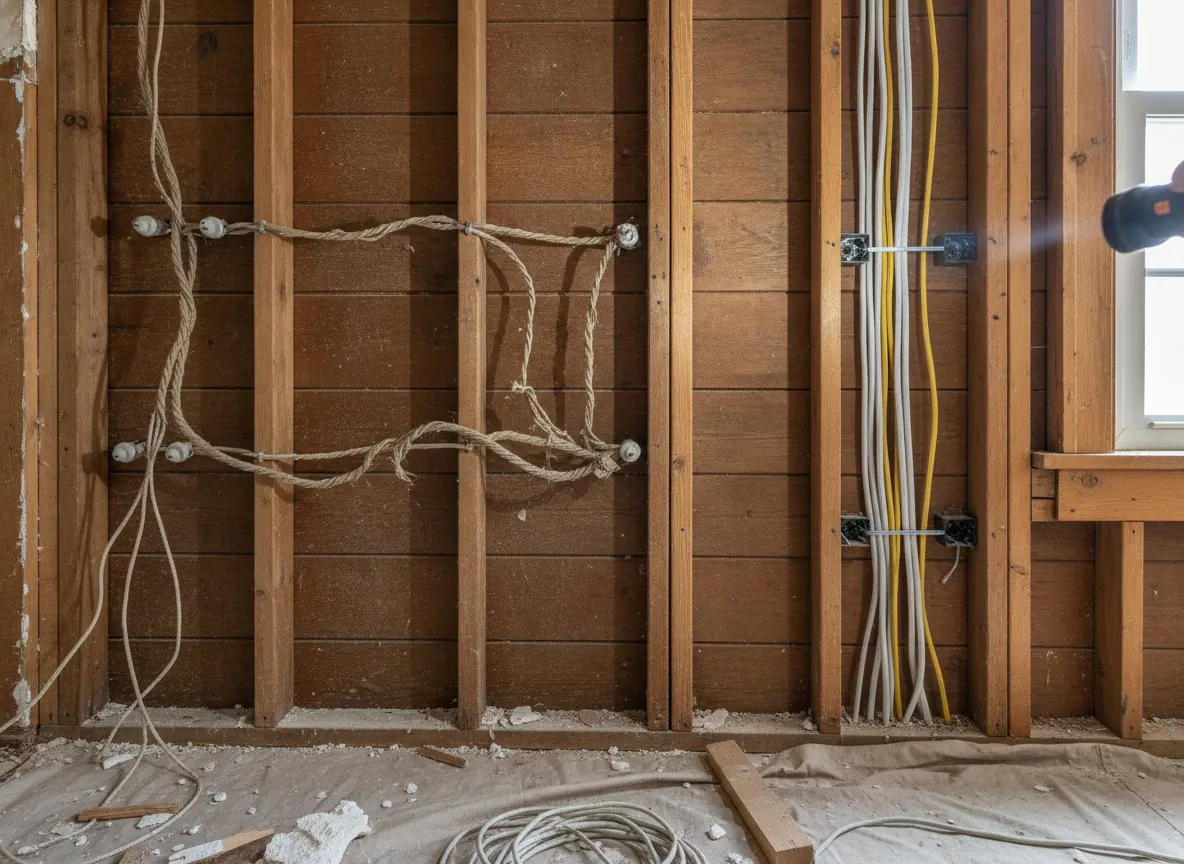
Short answer: knob-and-tube is an early wiring method with no ground wire, insulation that is now many decades old, and a history of later splices and add-ons. It isn't automatically dangerous, but it wasn't built for modern loads, and some insurers ask about it. If you own or are buying an older home in Bozeman, MT, have a licensed electrician evaluate what is actually in the walls before deciding between a partial and a full rewire.
This guide covers how to spot it, the real concerns, insurance questions, rewiring options, and what to know if the house sits in one of Bozeman's historic districts.
What is knob-and-tube wiring?
Knob-and-tube was a common way to wire houses in the late 1800s and early 1900s. Single insulated conductors run separately, held off the framing by porcelain knobs and passed through joists inside porcelain tubes. Hot and neutral travel apart, and there is no equipment ground. Connections were often soldered and wrapped by hand.
The age of a house doesn't tell you what is behind the plaster. Many early homes have been partly rewired over the decades, some more than once, and some still have original circuits in service alongside newer cable. Only an inspection tells you which.
Where you might find it in Bozeman
Bozeman's oldest housing sits close to downtown and MSU. The city says Bozeman has ten National Historic Districts and 47 individually listed properties. Its first, the South Willson Historic District (1978), is now part of the Bon Ton Historic District. Other listed districts include Cooper Park, North Tracy Avenue, Lindley Place and South Tracy-South Black.
By the numbers, about 11.6% of Bozeman's housing units were built before 1950, roughly 2,993 homes, and about 2,321 were built in 1939 or earlier (ACS 2020–24 5-year). Nobody has published how many of those still have knob-and-tube, so treat any house-by-house guess with caution. In Livingston, 45.7% of homes date from before 1950 by the same survey; see the Livingston page.
How to tell if your house has knob-and-tube
You can often spot it without opening anything. Look, but don't touch or pull on wires:
- In an unfinished basement or attic, white porcelain knobs on joists or rafters, with single cloth-covered wires running between them.
- Porcelain tubes through framing members.
- Mostly two-prong outlets, especially on upper floors.
- A fuse box, or an old panel feeding only a few circuits for the whole house.
- Light fixtures or switches with cloth-insulated wires behind them, seen during a fixture change.
Attics are often covered with insulation, which can hide old wiring. A licensed electrician can trace which circuits are live and which were abandoned.
Is knob-and-tube wiring safe?
It depends on condition and use. The concerns electricians usually raise:
- No ground. Three-prong devices plugged into ungrounded circuits have no ground path, and surge protection doesn't work as intended.
- Aging insulation. Rubber and cloth insulation can become brittle, especially where it has been disturbed.
- Insulation around the wire. The system was designed to shed heat into open air. Electricians often advise against burying it in blown-in insulation, which comes up during energy upgrades in a cold climate. Ask an electrician before anyone insulates over it.
- Later changes. Splices into newer cable, over-sized fuses and extension circuits added over the years are frequent problems.
- Winter load. Space heaters and electric blankets in an older bedroom can push old circuits hard during a long Bozeman winter. If breakers or fuses trip, read why breakers trip in winter.
For two-prong outlets, the code allows some GFCI replacements on ungrounded circuits when labeled correctly, which can add shock protection without a full rewire. Ask the electrician whether that fits your house; the outlets and GFCI page covers it.
Insurance and home sales
Some insurers ask whether a home has knob-and-tube, and some may want an electrician's evaluation or replacement before writing or renewing a policy. Practices vary by company, so ask your agent directly. If you are buying, ask the seller for any records of rewiring, permits or inspections, and budget time for an electrician's look during the inspection period.
Partial or full rewire?
A licensed electrician will usually suggest one of three paths:
Replace the active circuits
Rewire the circuits still in use and disconnect abandoned runs, starting with kitchens, baths and bedrooms.
Phase the work
Rewire floor by floor or alongside a remodel, so walls are opened once.
Full rewire with a panel upgrade
Replace all branch wiring and, often, move to a larger service for heat pumps, an EV charger or an induction range.
Plaster walls and finished ceilings make fishing new cable slower, and patching is often a separate trade, so ask whether the quote includes it.
| Job | Typical range | Source |
|---|---|---|
| Whole-house rewiring | about $6–$10 per sq ft | 2026 cost guides |
| Panel upgrade, 100 to 200 A | $1,300–$4,500 | HomeGuide · Fixr |
| GFCI outlet | $130–$300 (avg ≈ $210) | Angi, 2026 |
The Bozeman electrician cost guide has a rewiring calculator. The rewiring older homes page and the panel upgrade page explain the work in more detail.
Historic districts: what changes and what doesn't
Interior rewiring is mostly about permits and inspections, not design review. The City of Bozeman issues the electrical permit inside city limits. Exterior changes are different. Bozeman's Neighborhood Conservation Overlay District, drawn in 1991 from the 1954 city limits, adds review for exterior changes, new construction and demolition. If a rewire or service upgrade means moving the meter, adding a new service mast or changing what shows on the street side, ask the city's historic preservation staff early. The contractor should plan the route with that in mind.
Landlords: the DLI pamphlet says electrical work on rental properties must be done by licensed contractors, and the homeowner exemption doesn't apply to rentals. Renters should report two-prong outlets, flickering or warm switches to the landlord in writing. Not legal advice.
Montana requires electricians and electrical contractors to be licensed by the State Electrical Board (MCA Title 37, ch. 68). Look up any contractor or electrician by name or license number in the Montana DLI license lookup, and ask to see the license; electricians must carry it on the job. Ask each contractor for a certificate of liability insurance, a written itemized quote, who pulls the permit, and whether wall patching is included.
About this site: Bozeman Electricians is a free quote-referral service, not an electrician or electrical contractor. It holds no Montana electrical license and does not perform electrical work. You describe the job once, and independent electrical contractors licensed by the Montana State Electrical Board and serving Bozeman, MT and the Gallatin Valley can reply with quotes on their own schedules. Some contractors may pay to receive requests or calls. Request free quotes.
Frequently asked questions
Is knob-and-tube wiring safe to keep?
It depends on its condition and how it has been modified. It has no ground, the insulation is old, and it was not designed to be covered by insulation or carry modern loads. A licensed electrician can evaluate it and tell you which circuits should be replaced first.
Can I get homeowners insurance with knob-and-tube wiring?
It varies by insurer. Some ask about it and may want an electrician's evaluation or replacement first. Ask your agent before you buy or renew, and keep records of any rewiring and permits.
Do I have to replace all the knob-and-tube at once?
Not always. Many owners replace active circuits first, or rewire in phases alongside a remodel. A licensed electrician can recommend an order based on what is in your walls and your planned loads.
Does rewiring a house in a Bozeman historic district need special approval?
Interior rewiring needs an electrical permit from the City of Bozeman inside city limits. Exterior changes, such as moving a meter or service mast, may need review in the Neighborhood Conservation Overlay District. Ask the city early.